
Resource Guide
Industrial Platform Scales for UAE Warehouses and Factories: A Buying Guide
A practical selection framework for platform scales, floor scales, and crane scales used in high-throughput logistics and production environments across the UAE.
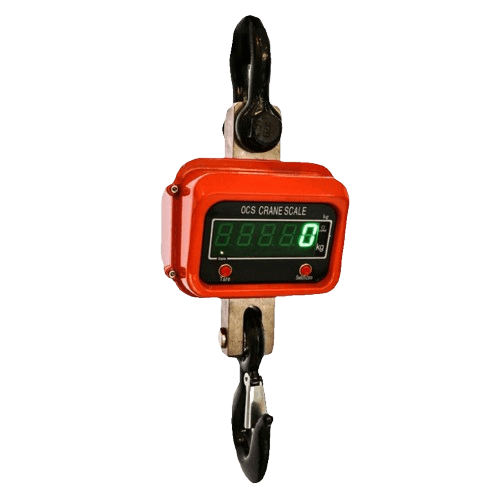
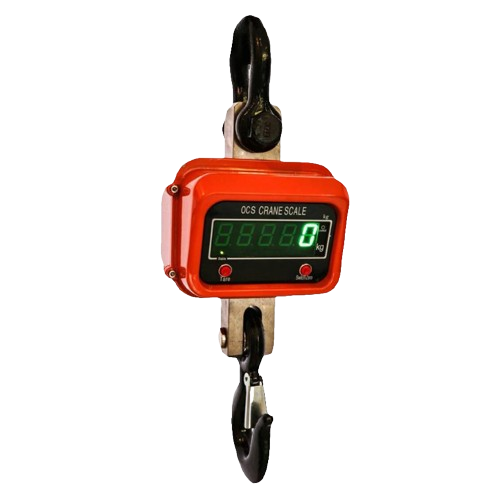
In warehouse and factory operations across the UAE, weighing is a control point that affects receiving speed, dispatch accuracy, and inventory confidence. If the scale is slow or unstable under real traffic, the full workflow suffers.
Choosing the right industrial scale means matching equipment behavior to your actual throughput needs. This guide walks through the key factors to consider when selecting platform scales, floor scales, and related equipment for logistics and production environments.
Step 1: Map Your True Load Behavior
Do not select a scale based on maximum load capacity alone. Understanding your normal load pattern is more important for long-term reliability.
Document these details before you compare models:
- The typical load range during a normal shift
- Peak load spikes, how often they occur, and by how much they exceed the average
- The size and shape of the items or pallets being weighed
- How forklifts or trolleys move around the weighing station
A scale that fits only theoretical maximum values can underperform during real operating conditions. The right approach is to choose a capacity that covers your typical loads comfortably, with a margin for the peaks. Our crane scales category includes models with different capacities for lifting and material handling applications.
Step 2: Match Platform Geometry to Your Operation
The platform size should fit what you weigh most often, not what you weigh occasionally. A platform that is too large or too small creates operational friction.
Key checks for geometry:
- Can operators center the load safely and quickly without extra steps?
- Is the indicator or display readable from the operator natural standing position?
- Is there enough clearance around the scale for movement and positioning?
Poor geometry introduces delays and inconsistent readings. In a busy warehouse, every extra second per weighing transaction adds up over a shift. For applications that require a flexible setup, hanging scales offer an alternative when platform placement is limited.

Step 3: Prioritize Repeatability Over Ultra-Fine Increments
In high-volume industrial environments, ultra-fine readability is often less valuable than stable, repeatable readings under operational movement. A scale that delivers consistent results across different loads and operator techniques is more useful than one that can detect tiny differences but struggles with stability.
Look for these qualities:
- Fast stabilization time after the load is placed
- Readability that matches your process decision-making needs, not the finest increment the model offers
- Consistent repeat performance across different shifts and operators
- Durable construction that withstands daily cycles without degrading
For warehouse receiving and dispatch operations, a table top and bench scale with a strong platform and dependable repeatability is often a better fit than a more sensitive model that is harder to keep stable.
Step 4: Plan for Process Integration
Industrial teams benefit from a standard process flow around the weighing station. The hardware should support this flow with minimal friction.
A simple and effective weighing process follows these steps:
- The load arrives at the station and is positioned consistently on the platform
- The reading is captured, and the operator confirms it before moving the load
- The weight data moves into the dispatch, inventory, or production process
- If the reading is outside the expected range, a defined escalation path is followed
An escalation path is important. Operators should know what to do when a weight reading does not match the expected value. Our scale accuracy and compliance readiness guide covers this topic in more detail.
Step 5: Design for Lifecycle Value
The lowest purchase price does not always represent the best value. Long-term value comes from equipment that remains reliable across months and years of use.
Standardizing on a limited set of models across your sites offers several benefits:
- Faster staff training because the same controls appear on every scale
- Simpler spare parts planning and service scheduling
- More predictable troubleshooting when problems do arise
- Better operational benchmarking because all sites use the same equipment
If your operation spans multiple locations in the UAE, model standardization simplifies your support and maintenance planning.
Industrial Scale Types Compared
Different industrial tasks call for different scale types. Here is a quick overview of the main categories relevant to warehouses and factories:
- Crane scales are designed for suspended weighing. They are useful in warehouses where items need to be weighed during lifting rather than placed on a platform. The crane scales collection includes models with various capacities.
- Floor scales and platform scales sit at ground level and accommodate pallets and large items moved by forklifts or trolleys.
- Hanging scales serve a similar purpose to crane scales but are typically used for lighter loads and in settings where a full crane setup is not required. See the hanging scales page for options.
- Table top and bench scales work well for back-of-house operations, packing stations, and quality check points. The table top collection covers models suitable for these settings.
Industrial Shortlist Checklist
Before you make a purchase decision, go through this checklist:
- True daily load profile captured, including peak loads
- Platform dimensions validated on site for clearance and operator access
- Indicator visibility and operator ergonomics confirmed for the installation location
- Stability tested under realistic movement and traffic conditions
- Escalation and verification routine defined for the team
- Support and lead time expectations confirmed with the supplier
Final Recommendation
For UAE warehouses and factories, choose industrial scales that stay stable under real operating conditions and support the full process flow around them. The right choice protects both throughput and data reliability over the long term.
If you are planning an industrial scale purchase and need guidance, share your load profile and environment details through the contact page. Our team serves industrial customers across Dubai, Abu Dhabi, Sharjah, Ajman, Ras Al Khaimah, Fujairah, and Umm Al Quwain.