
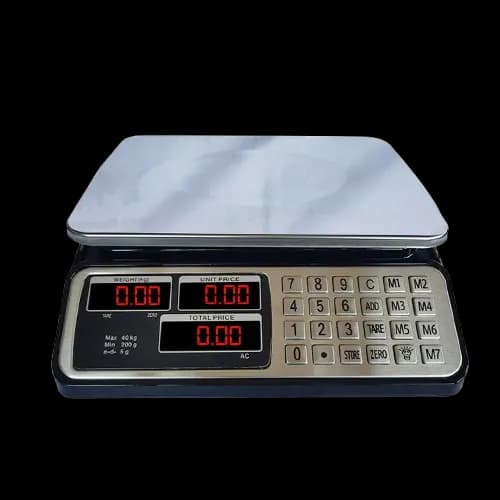

Back-of-house operations in Dubai restaurants, packing stations, and stockrooms rely on dependable scales for weighing ingredients, packaged goods, and incoming stock. Two common equipment types for these settings are table top scales and bench scales. The terms are sometimes used interchangeably, but there are meaningful differences in design, capacity, and typical use cases.
This guide compares table top and bench scales so UAE businesses can choose the right counter-friendly weighing equipment for their packing, portioning, and stock handling needs.
What Is a Table Top Scale?
A table top scale is a compact weighing device designed to sit on a counter, table, or workbench. It typically has a smaller footprint and lower capacity than a bench scale. Table top scales are common in food preparation areas, retail counters, and light packing stations.
Typical uses for table top scales in UAE operations include:
- Portion control in commercial kitchens and bakeries
- Weighing ingredients for recipe-based food production
- Packing small to medium items for retail sale
- Quick weight checks at quality control points
Table top scales are valued for their small size and ease of cleaning. Many models offer features like tare, unit conversion, and simple digital displays. You can browse the available options in the table top and bench scales section.
What Is a Bench Scale?
A bench scale is a larger counter or floor-standing weighing device built for heavier loads and more demanding cycles. Bench scales often have a bigger platform, higher capacity, and more robust construction than table top models. They are suitable for stock handling, receiving, and packing larger items.
Typical uses for bench scales in UAE businesses include:
- Weighing incoming stock shipments at warehouse receiving points
- Packing bulk items into boxes or bags for dispatch
- Checking weight compliance for export or shipping documentation
- Weighing larger food portions in catering or wholesale operations
Bench scales typically offer a wider platform that can accommodate larger boxes, trays, or containers. For models suited to your operation, explore the table top and bench scales category.
Key Differences Between Table Top and Bench Scales
The main differences involve capacity, platform size, and the type of work each scale is designed to support.
Capacity
Table top scales generally cover lower weight ranges, typically from a few kilograms up to around 15 to 30 kilograms. Bench scales start where table top scales top out and can handle 30 kilograms and above, with some models reaching 100 kilograms or more.
Platform Size
The platform on a table top scale is smaller, which is appropriate for individual items, bowls, or small boxes. Bench scales have larger platforms that can hold bigger containers, multiple items, or bulk packages.
Portability
Table top scales are easier to move between workstations. Bench scales are heavier and usually stay in one location for extended periods.
Durability
Bench scales are typically built for higher daily usage volumes. They can withstand repeated loading and the wear of a busy packing or receiving station.
How to Choose the Right Type for Your Operation
The decision depends on what you are weighing and how often.
Choose a table top scale when:
- Your items weigh up to 15 to 20 kilograms per transaction
- You need the scale to sit on a counter or workbench
- Portability between stations is important
- You are weighing individual items, ingredients, or small packages
Choose a bench scale when:
- Your loads regularly exceed 20 kilograms
- You need a larger platform to accommodate big containers or boxes
- The scale will stay in one location for high-volume use
- You are handling stock receiving, bulk packing, or shipping verification
For retail counters that need fast, customer-facing weighing, our retail and grocery scale guide covers price computing scales in more detail.
Application-Specific Guidance
Packing and Portioning
For packing and portioning, the speed and readability of the scale matter. A table top scale with quick stabilization and easy tare function works well for packing individual portions. For bulk packing where larger quantities are weighed at once, a bench scale with higher capacity is more practical.
Stock Handling
Stock handling in warehouses and back rooms involves weighing boxes, bags, and containers of various sizes. A bench scale with a larger platform and higher capacity is usually the better choice for this work. Operators can place larger items on the platform without worrying about fit.
Food Preparation
In commercial kitchens, bakeries, and cafes, table top scales are the standard choice. They fit on prep counters, are easy to clean, and provide the readability needed for recipe-based work. For guidance on kitchen-specific models, see our kitchen scale guide for Dubai businesses.
Installation and Maintenance Tips
Both scale types benefit from proper setup and care:
- Place the scale on a stable, level surface to ensure accurate readings
- Clean the platform regularly, especially in food environments
- Perform a quick zero check before each use
- Schedule periodic verification with a reference weight
The National Institute of Standards and Technology publishes reference materials on weighing practices that may be useful for understanding terminology. You can find these at NIST.gov.
Checklist for Buyers
Use this checklist when evaluating table top or bench scales:
- Determine your typical load range per transaction
- Measure the available counter or bench space
- Decide whether the scale needs to be portable or fixed
- Check the platform size against the containers you use
- Confirm the readability matches your portion or packing tolerance
- Verify cleaning requirements for your specific environment
Final Recommendation
For packing, portioning, and stock handling in the UAE, table top scales work well for lighter, counter-based tasks while bench scales handle heavier, high-volume work. Choose the type that matches your load range and workflow.
If you need help selecting the right model, share your typical items and weight range through the contact page. Our team serves customers in Dubai, Abu Dhabi, Sharjah, and across the UAE.